
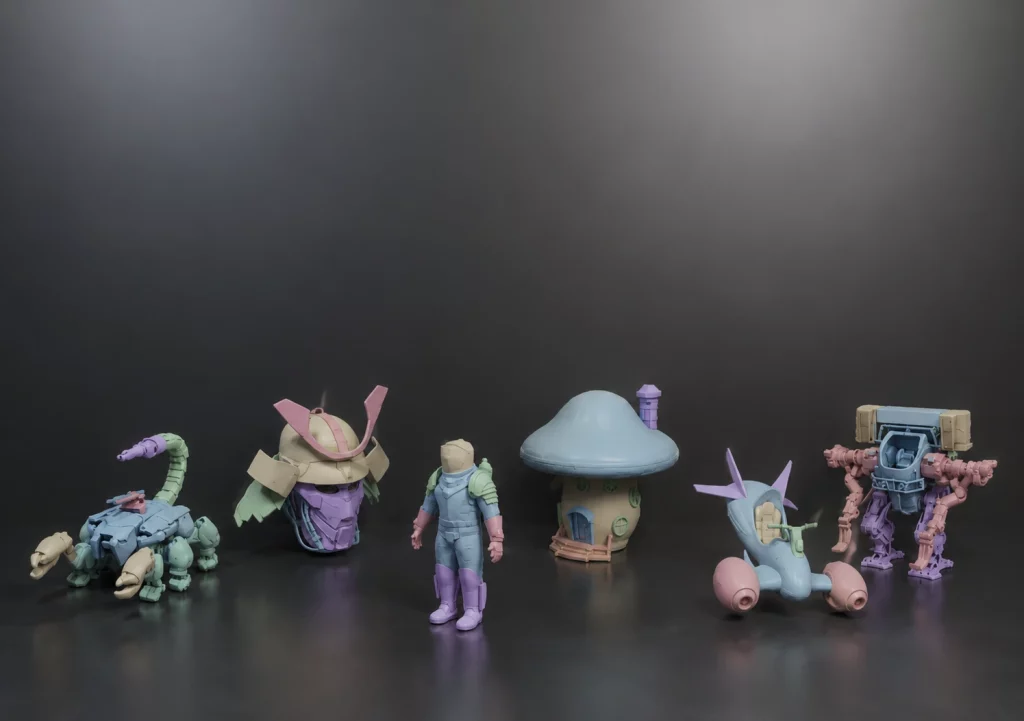
Roblox unveiled CubePart, its new generative AI framework, which creates game-ready 3D assets with labeled, functional parts, streamlining content creation for developers.
What is CubePart and Why It Matters? ✨
Big news coming out of Roblox this week for anyone building in the platform, and honestly, for anyone playing on it too. They just unveiled CubePart, which is their new generative AI framework designed to tackle one of the trickiest parts of 3D content creation: making assets that actually *work* in a game, right out of the box. Think faster, more functional content for your favorite experiences, potentially leading to way more unique stuff showing up across Roblox.
Solving the 3D Asset Bottleneck ⏳
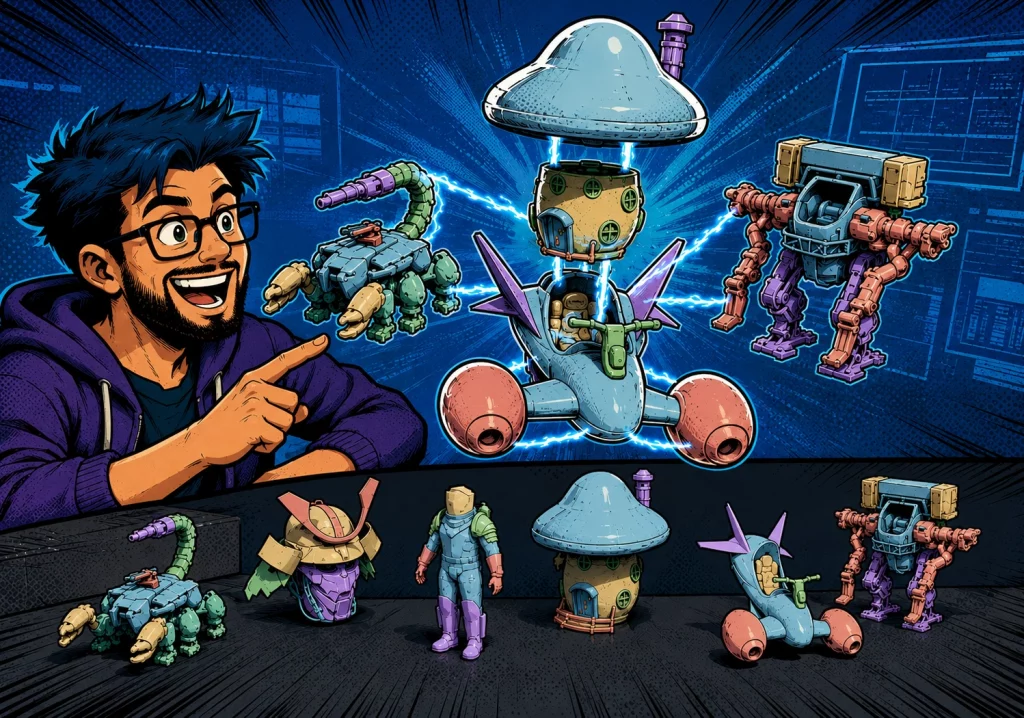
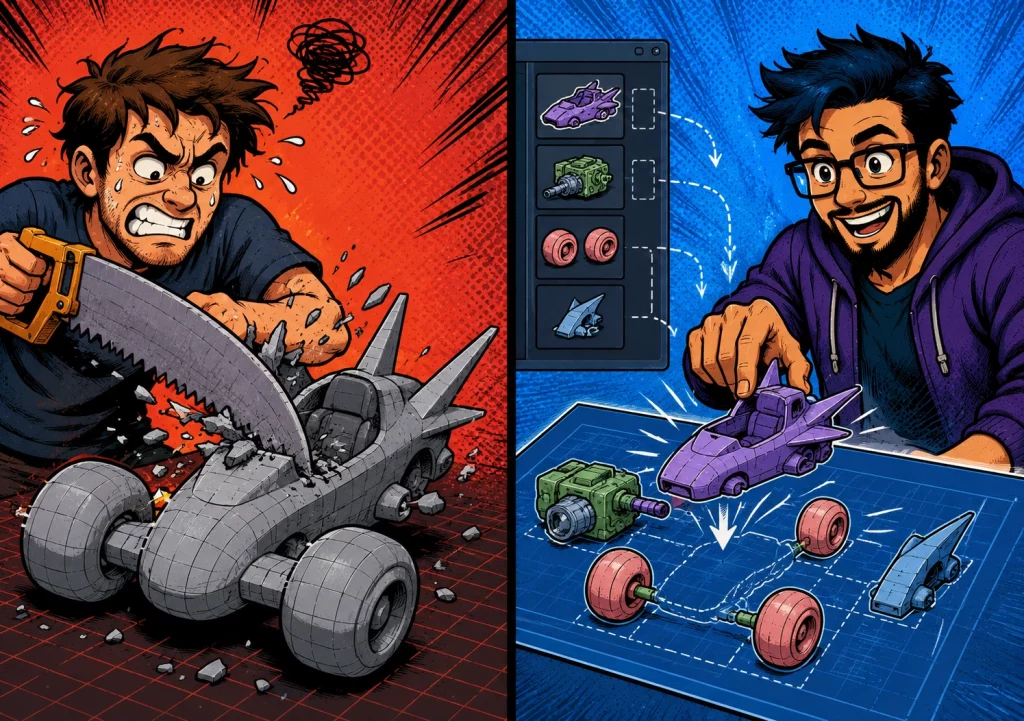
What’s the deal? Well, you know how current AI models can spit out some seriously impressive 3D objects from a text prompt, right? Like, “a fantastical steampunk airship” and boom, there it is. Problem is, for a game developer, that’s usually just one big chunk of 3D data. If you want that airship to have propellers that spin, landing gear that deploys, or doors that open, an artist has to manually go in, chop up that single model, name all the parts, and basically make it game-ready. It’s a huge bottleneck, super time-consuming. CubePart aims to obliterate that. Roblox describes CubePart as the first generative AI framework that lets you control the parts of a 3D mesh you’re generating, using open-vocabulary prompts. What that means in plain English is you don’t just get a cool-looking model; you get an *assembled set* of distinct, functional, and already-labeled meshes. Think of it: a car with wheels, doors, and headlights already separated and named, ready for your animation, physics, and gameplay scripts. No more manual slicing and dicing. That’s a pretty big deal.
The Power of Schema-Driven Generation 📝
They’re really pushing this idea of a “schema” as the “API contract” for interactive 3D assets. On Roblox, any interactive behavior—like a door opening or a wheel spinning—is handled by scripts that target specific, named parts of an asset. But not every car needs the same parts, depending on the game. A race car might need a “spoiler” and “nitro boost nozzle,” while a rescue vehicle needs a “siren” and “winch.” CubePart doesn’t force a fixed set of parts. Instead, you give it two inputs: a global text prompt (like “a jelly fish themed race car”) *and* a specific, open-ended list of parts you need (like “front left wheel,” “gun,” “headlights,” “body”). The AI then generates the asset with *exactly* those named, separated parts. This open-vocabulary control is what lets CubePart capture the crazy diversity of stuff you see on Roblox. It’s not limited to pre-defined categories. If you need a “cup holder” on your giant space slug monster, you can ask for it. The schema essentially becomes the agreement between the generated asset and your gameplay code. Pretty clever.
How CubePart Works Under the Hood ⚙️
The Two-Stage Generation Process 🏗️
Under the hood, it’s a two-stage process. Stage 1 basically figures out the overall shape of your object based on your global prompt. So, “a tow truck characterized by cartoonish features.” This stage has been fed a massive amount of mesh-text data – around 4.7 million pairs – to learn how language maps to 3D shapes. It’s also “schema-aware,” which means it keeps your requested parts in mind from the start.Then Stage 2 takes that foundational shape and goes to town, figuring out where all those specific parts you asked for should be. For that cartoonish tow truck, Stage 2 would generate separate part data for the “cab,” “chassis,” “wheels,” “roof beacon,” and “tow assembly.” The brilliance here is that Stage 2 doesn’t need as much data to learn part boundaries because Stage 1 already handled the complex text-to-shape translation. It’s all about efficiency in how they trained it. They also threw in these “cross-part attention blocks” to make sure everything fits together smoothly, like the cab and tow assembly lining up perfectly with the chassis.
Building a Massive Training Dataset 🧠
To train all this, Roblox had to build a seriously huge dataset. We’re talking over 460,000 assets and more than 2 million parts. That’s over 11 times bigger than previous public datasets. Instead of manually labeling all those parts, which would be a nightmare, they used an automated pipeline with vision-language models (VLMs). This pipeline renders 3D models from multiple angles, using both textured and part-colored images, all stamped with markers. This lets the VLM figure out and name each part in 3D space. One neat detail here is how their dataset teaches the AI “spatial differentiation.” Previous datasets might just label every wheel as “wheel.” Their pipeline can distinguish between a “front left wheel” and a “rear right wheel.” That level of precision is exactly what game engines and developers need for scripting specific behaviors.
Unlocking New Possibilities for Creators 🚀
So, what does CubePart unlock for creators? Well, assets that directly match your gameplay code. Seamless integration with existing animation, physics, and scripting workflows. No more wrestling with generated models to make them fit. Plus, it can even take existing artist-made meshes and decompose them according to a new schema. So if you’ve got some legacy assets you want to upgrade or make more interactive, CubePart can help there too. It’s not just for generating new stuff. They’re not done, of course. They mentioned CubePart currently handles “rigid-body decomposition.” But they’re already working on things like “skinned vertex weights” for organic character deformation. That’s a whole different ballgame for character rigging and animation. They also noted that while cross-part attention reduces overlap between parts, it doesn’t totally eliminate it. And spatial reasoning, like accurately placing “front-left” versus “rear-right” parts, still has room for improvement. Schema-driven generation is clearly seen as a massive step forward for making generative 3D actually useful on a platform where everything is meant to be interactive. And the best part? This tech isn’t just a research paper. Roblox plans to make it available to creators directly inside Roblox Studio pretty soon. That’s going to shake things up for sure.
Final Thoughts ✅
CubePart is a major advancement for Roblox creators, delivering game-ready 3D assets to streamline development and drive more diverse, interactive player experiences.
Roblox CubePart AI FAQ
CubePart is Roblox’s brand-new generative AI framework. It’s designed to make 3D content creation way faster and easier. You get assets with functional parts that work right out of the box. This means more unique experiences popping up across Roblox.
Current AI models give you cool 3D objects as one big chunk. Artists then manually chop them up for game functionality. CubePart obliterates that huge, time-consuming bottleneck. It gives you assembled sets of distinct, labeled parts, ready for your game scripts.
You give CubePart a global text prompt, like ‘a jellyfish themed race car.’ Then, you provide a list of the exact parts you need, such as ‘front left wheel’ or ‘gun.’ The AI generates the asset with all those named, separated parts already there. This means no more manual slicing to get your stuff ready for gameplay.
Roblox plans to make CubePart available to creators. You’ll find it directly inside Roblox Studio. They said it’s coming ‘pretty soon.’ This tech is coming directly to creators in Roblox Studio.